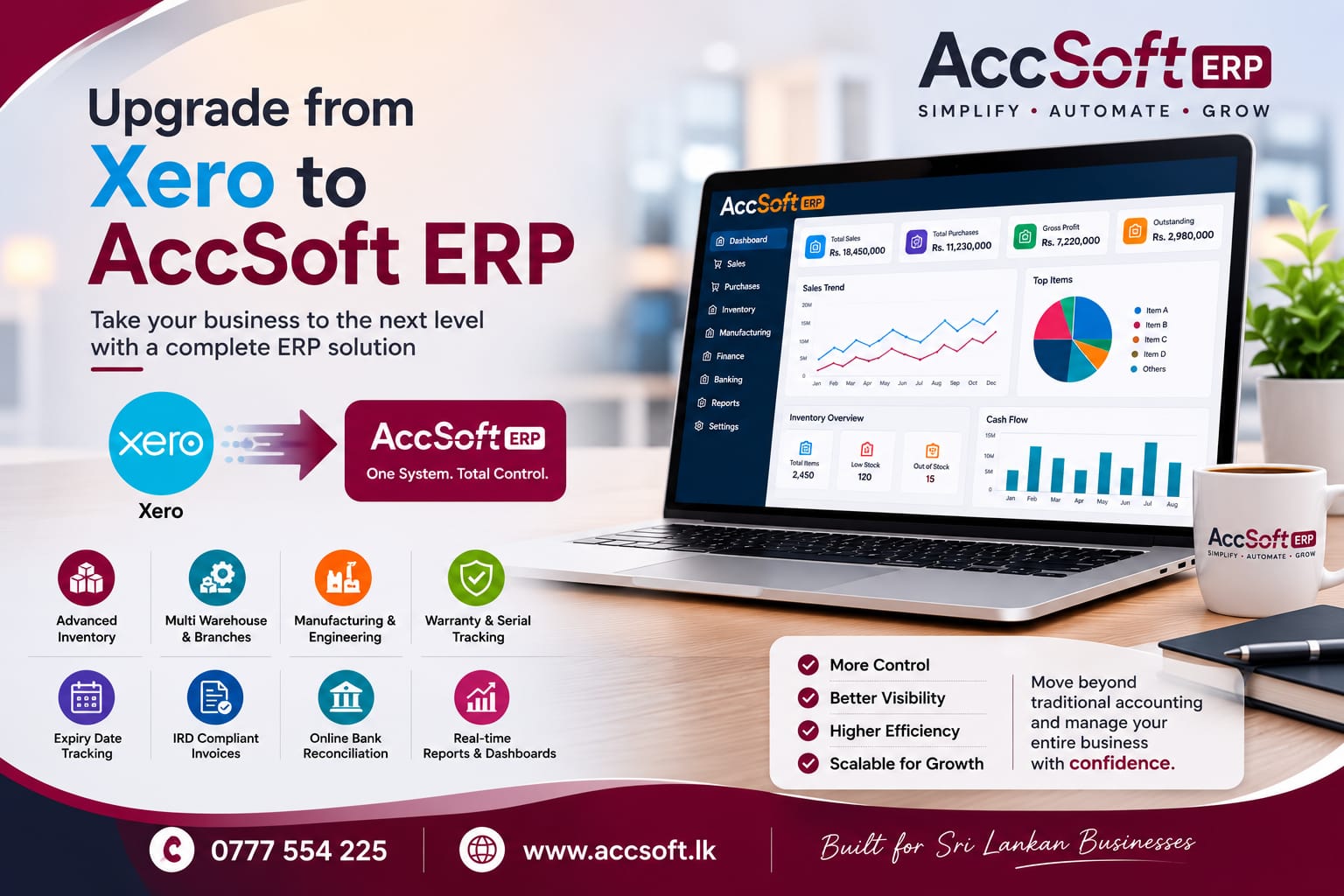
If you are using Xero today, you have already taken an important step towards managing your business professionally. Xero has become a popular accounting platform because it is easy to use, cloud-based, and helps businesses manage their finances efficiently. For many companies, it does exactly what it is meant to do.
But as businesses grow, something interesting happens. The questions business owners ask begin to change.
🔎 Signs You Are Outgrowing Xero
- Which warehouse has this stock?
- Which products are selling fastest?
- Which jobs are profitable?
- Which customer orders are waiting to be delivered?
- Which serial numbers are still under warranty?
- Which products are close to expiry?
- Can we manage manufacturing in the same system?
These are not accounting questions anymore. They are business management questions. That is usually when companies begin looking at ERP systems.
Growth Changes the Way You Work
When a business is small, accounting is often the biggest priority. As the business expands, operations become just as important. Inventory grows. More employees join. Warehouses increase. Customers expect faster service. Management wants better information.
Many businesses find themselves using Xero together with spreadsheets, separate inventory software, or manual reports. At first, this seems manageable. Eventually, it becomes difficult to keep everything in sync — and errors start to appear.
Accounting Software vs ERP: What Is the Difference?
Accounting software focuses mainly on financial records. An ERP system manages the entire business. Instead of separate systems for accounting, inventory, purchasing, manufacturing, warranty management, reporting, and operations, everything works together in one platform.
This means information only needs to be entered once. The rest of the business updates automatically — saving time, reducing mistakes, and giving management a clear, real-time view of how the business is performing.
Why Businesses Choose AccSoft ERP Over Xero
AccSoft ERP has been developed specifically for Sri Lankan businesses. It combines powerful accounting with complete operational control across every department. The full feature set includes:
Everything works together in one integrated system — no more switching between Xero, spreadsheets, and separate tools.
Built for Sri Lankan Businesses
One advantage many customers appreciate is that AccSoft ERP has been designed around local business practices. It supports Sri Lankan tax requirements including VAT, SVAT, and SSL, local IRD-compliant invoice formats, local reporting, and practical business workflows.
Instead of trying to adapt your business to the software, the software is designed to support the way Sri Lankan businesses actually operate. After 25 years serving local businesses, AccSoft understands the realities of trading, distribution, manufacturing, and service businesses in Sri Lanka better than any offshore software platform.
A Smooth Step Forward
Moving to an ERP does not mean your previous accounting software was the wrong choice. It simply means your business has grown. Many successful businesses begin with accounting software and later move to ERP when they need greater control over operations. It is a natural progression — and AccSoft makes the transition as smooth as possible with local implementation, training, and ongoing support.